Small protected areas and poaching main factors affecting survival of wildlife
Bandar Seri Begawan - The miniature size of wildlife protected areas and poaching have been identified as two main factors that affect the survival of wildlife.
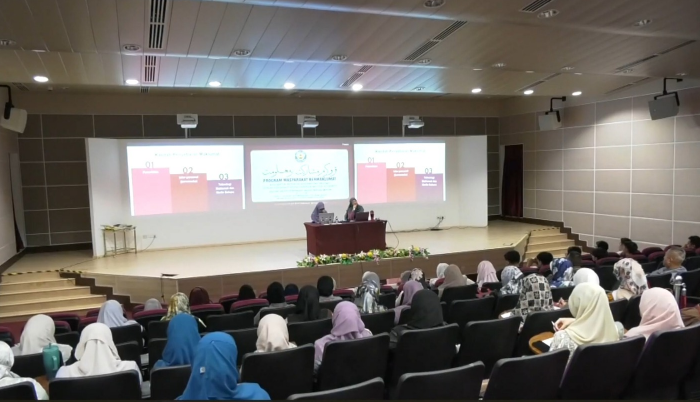
These were highlighted by Dr Joseph Charles, a senior lecturer from Universiti Brunei Darussalam who has been an advocate of the protection of Brunei's rich wildlife in his presentation yesterday.
Dr Charles said, "The survival of wildlife and the size of protected areas are related. We have protected areas in Brunei in the form of national parks and conservation forests. Are Brunei's protected areas large enough for wildlife species to survive?
"If the protected areas are very small, normally vulnerable species will slowly die and the immigration of other species will occur. So an imbalance from extinction of species and immigration of other species will likely happen and in the long run, result in low species diversity in the small-protected areas," he added.
"Ecological theory, if looking at large wildlife, there should be 50 pairs to form a population that could breed. This is called minimum viable population and with this, the chances for the species to survive for longer periods are very high."
Citing the example of the biggest cats in Brunei, namely the clouded leopard, he said, "The clouded leopard needs a minimum home range of 30 to 40 square kilometres to survive. With 50 pairs, you need protected areas of about 1,500 to 2,000km. '
"In Brunei, two major protected areas are Sungai Ingei Conservation Forest, which is 180 square kilometres and Ulu Belalong National Park, which covers an area of 550 square kilometres. Using these figures, Ingei has four to six leopards while the Belalong National Part has 16 to 18 clouded leopards. If kept in small areas, the population will slowly become extinct. To overcome that and make it a viable protected area, Sungai Ingei has to be 10 times bigger while the national park will have to be 3.1 times bigger.
"Brunei's protected areas are too small for long-term survival of wildlife. The irony is that Brunei has most of the endangered species in Borneo. The protected areas can be regarded as forest fragments surrounded by a sea of disturbed and deforested habitats."
Small areas also pose another problem, which is hunting and poaching. This has made the situation worse. Pictures of poaching in Brunei were also disclosed at the presentation.
"Workers at the Lumut Highway construction killed a clouded leopard and sold its meat. Other problems are road access into the forest that will affect the survival of wildlife.
"The short-term solutions to address poaching are updating the Wildlife Act. The need for strict law enforcement, as well as public education and information dissemination could aid in preventing such acts from occurring."
The senior UBD lecturer further said, "Wildlife is our national treasure and it is our responsibility to protect and conserve it for future generations. It is our pride. Therefore public support and cooperation with the Wildlife Unit is essential to contain poaching."
--Courtesy of Borneo Bulletin.gif)