Thought of the Day:
"For many of us, there's a gap between the compass and the clock-between what's deeply important to us and the way we spend our time."

Sunday, May 19th

Last update08:11 PM (UTC +8:00)

You are here: Home Local News Adaptability To Change Makes Or Breaks One’s March Towards Success
Banner

Adaptability To Change Makes Or Breaks One’s March Towards Success

  • PDF

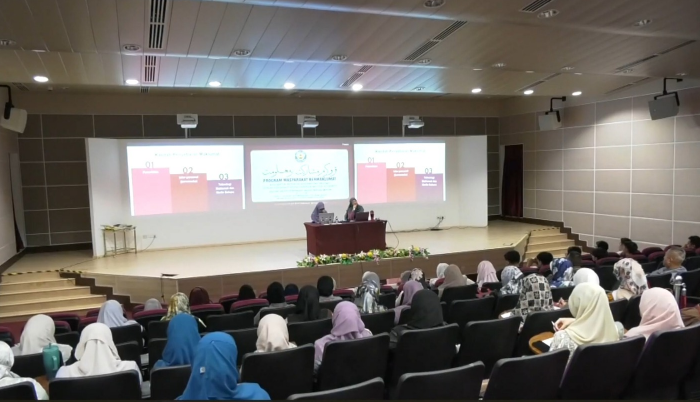
MoE holds forum on managing change

Bandar Seri Begawan - THE ability to adapt is what makes or breaks the Ministry of Education's march towards success.

This was stated by the Minister of Education, Pehin Orang Kaya Seri Kerna Dato Seri Setia (Dr) Haji Awang Abu Bakar bin Haji Apong during a keynote address yesterday at the 'Change Management Forum' at the Rizqun International Hotel.

The minister also emphasised that the people at the ministry need to be passionate, committed and give their best in making the ministry's changes successful.

The gathering of our change stakeholders has been long overdue and it is high time we address issues that can contribute to our growth in certain areas," said the minister.

He added, This forum is timely because it is an avenue to address the 'human side' of change. On paper, we have some exciting flagship projects that are of interest to the community, namely our new education system - SPN21, our migration into education technology - the e-Hijrah, and the revamping of Vocational Technical Education These are exciting projects undertaken by the Ministry of Education but at the end of the day, the outcome or the success depends very much on the human side."

The minister said "The involvement of every stakeholder is crucial as it allows us to collectively evaluate two prerequisites for change. The first is the need for change. The second is our capability to change.

"Our need for change is obvious. Globalisation, rapid advancement of technology and uncertainties. Change is driven by these needs, and to borrow an old cliche, change is inevitable. We have limited, if any, control on the increasingly diverse and demanding needs of our citizens. But what we have control of and what we should use to our advantage, is our capability to change.

"Our adaptability to change is what makes or breaks our march towards success: We are faced with resistance because different people react differently to change. For some people, change often instils fear, scepticism and disagreement before arriving to a state of acceptance. Our responsibility is therefore to bring everybody on board and work as a team. Therein lies our capability to change.

"Change is both an institutional journey and also a very personal one. Thus, 'Culture Change' is one of the five initiatives identified by the Heads of Department to be implemented by the Ministry of Education since 2011. That is one of the reasons why we are here," he added.

The minister also shared a personal experience, where he said, "Right after independence, Brunei Darussalam has gone through key changes in its drive to become a self sustaining nation, and I took great pleasure in being involved with some of these nation-wide development.

In education these developments' that were executed had its fair share of reservations and challenges. When we introduced the bilingual policy into our education system, it was received with scepticism by some sectors of our society, to the point where criticisms were made of the policy makers being non-patriotic.

The establishment of our first university Universiti Brunei Darussalam, was also at first a precarious affair. It being the first, no one in the Ministry of Education has had the experience of setting up a university. In addition to this fear of the unknown we also had to establish UBD within a short period of time The task was monumental and unprecedented, and similar to the bilingual policy, it received its share of scepticism and reservation here we are today an education system that has educated a generation of fluent speakers, and an internationally recognised university. We are living in the outcome of these changes. The bilingual policy equipped our people with equal competence in the Malay Language and the English Language or Arabic Language, creating opportunities around the region and all over the world, in pursuit of higher education and in performing our roles in the international arena. We now have a strong population of knowledgeable workforce to support the nation's operations and aspirations.

"Similarly, a majority of our teacher population received their education from our Sultan Hassanal Bolkiah Institute of Education in UBD. Ninety per cent of our 3,000 primary teachers are local Bruneians and most of them are graduates of UBD. Beyond teacher education, UBD has also produced prominent senior officers which are a testament to what the university has accomplished. Our success in this landmark effort made the establishment of subsequent universities a less arduous task.

"I share these two cases not only because they are close to my heart, but also because they are great examples of how change can become success stories if we address our capability to change. We went through challenging trials and tribulations. We addressed our scepticisms, we involved our stakeholders from every sector and we entrusted them ownership, we communicated the changes and we work people-to-people and as a team. Change needs a collective effort of direct and indirect stakeholders, driven by the pride and passion. This is the essence of change management.

"On a side note, sometimes personal sacrifices need to be made to achieve national interest. There is no greater satisfaction than in making the right change happen especially knowing that you have contributed to the building of the nation"

The minister also spoke on overcoming challenges in making changes, where he said In the last two decades we have been able to keep pace with global changes. However, the 21St Century is a new challenge altogether and we cannot risk being left behind in such a landscape of continuous changes and technological advancement.

"In conjunction with the 10th Civil Service Day on October 4, 2003, His Majesty the Sultan and Yang Di-Pertuan of Brunei Darussalam in his titah stated that The civil service is the moving vehicle. If it is weak and not dynamic, it can cause the country to trail behind all developments'. As early as a decade ago, His Majesty has foreseen the need for dynamic developments in order to keep up with the global community?'

In this regard, the minister said the ministry has employed various management tools in its attempts to strategise their changes. He added that the list perhaps starts with management by objectives, and then on to the quality control circle of total quality management, SWOT analysis and so on and so forth.

"Recently we brought in balance scorecards as another management tool. However when we reflect I wonder whether we have given them enough time, or if we have adequately embraced them to be able to say that they either worked splendidly for us, or they were just not suitable.

"When we bring in changes through an initiative or strategy we always ask ourselves what will be the return of these investments because there is always a cost attached to every initiative or strategy we execute.

"It is not easy to give quantitatively the return desired especially in the public service, as many departments deal with the provision of social services."

For the Ministry of Education, the minister said the success experienced in changing the landscape of education through the bilingual policy and UBD can be considered as a very good return of investment that continues to pay out with the production of quality and knowledgeable citizens.

"And with an educated population we developed a sustained harmony in our society, stability and peace. This ecosystem enabled us to uphold our social values as inherent in the Malay Islamic Monarchy concept or `konsep Melayu Islam Beraja'. We cannot put a price on these returns.

In our current situation; many ministries have formulated their strategy maps or strategic plans. However, how far have we been progressing with these strategies? It is tithe we review our progress and achievements, and we improve on them before we go any further, because we should realise whatever initiative is going to be moved by these strategy maps, we should acknowledge the attached cost, and efforts to built human capability and capacity If we can, relate this to our National Development Plan (RKN) and annual budget we are talking about investing a very huge sum of capital. We cannot afford mistakes and failure is not an option."

That's why, the minister explained, in the case of Ministry of Education, it is about time the ministry have mid-term reviews. Even with SPN21, it would take the ministry another decade or so to see a return of investment just as how long it took for the ministry to reap the benefits from the bilingual policy and the establishment of UBD.

"Now it's time for us to think and act on how we can move forward with a concerted effort, a collective ownership working as an integrated unit comprising various departments under the Ministry of Education to come up with good mid-term reviews and knowing how we can realise our objectives and vision."

The minister said, "So this is the essence of the forum that we will conclude today With that I'm confident we can reflect on what we are going to do next, and how we can move forward. Everyone must come on board with positive mind and attitude to collectively own the education changes that we bring in. This is in line with our aspiration to achieve `Wawasan 2035'."

The minister concluded his address with an aspiration, where he said, "In conclusion, all the strategy maps and management tools we employ will only work if we believe in making changes. I would like to emphasise here that we need to be passionate, committed and give our best in making our changes successful. For this to be sustainable we need to do follow-through, follow up and measures to ensure sustainability. We must believe that the right change will bring improvements and will support the drive of His Majesty's Government. Change must come with the right intentions. For Muslims, change must come with the right Nawaitu (intension)."

--Courtesy of Borneo Bulletin


blog comments powered by Disqus