Local News
Expert Warns Of Coastal Deforestation
Share Written by DATE_FORMAT_LC2
Bandar Seri Begawan - Brunei is doing "very well" in protecting its inland forests, but should continue to be vigilant at the same time by promoting awareness of reforestation due to increasing impacts of human settlements along coastal areas, said an expert yesterday.
With evident conservation efforts of forest protection, Prof K M Wong of University of Malaya said, "I think people in Brunei are aware that with an increasing population growth, there will be consequential impacts on the environment!'
Following his presentation on "Climate change consequences for rainforests and human health" yesterday, he told The Brunei Times that apart from conservation of inland forests, it was obvious that the coastal belts in Brunei have been the most impacted by deforestation.
"In my opinion, Brunei is a model country for keeping great chunks of its forests conserved. However, along its coastal belts (due to developments of) highways, kerangas forests have been fragmented. These species of forests cannot be sacrificed," he said.
"Kerangas forests are what Brunei is so famous for. However, there are a lot of kerangas patches along the coastal areas," he said.
He added that because Brunei's settlement patterns were primarily coastal, the Sultanate was fortunate to have such big forests as a resource.
Prof Wong suggested that Bruneians take heed in what natural vegetation and potential areas remained along the coastal areas for restoration.
"This requires research, innovation, trials and will take time to be explored," he said, adding that the Brunei's forestry and academic departments could look into developing general land programmes.
He also suggested that another way to further protect Brunei's forests in coastal areas was for human settlement patterns to be further refined.
"Research and appropriate planning should start, by giving more attention to the preservation of kerangas forests, as well as preservation of vegetation and restoration of habitats," he said.
With regard to the effects of climate change consequences on human health, Prof Wong said its impacts came down to how people managed the environment surrounding them.
Prof Wong said that due to climate change effects such as flooding, there were many instances of the spread of infectious diseases such as cholera and dengue fever. He added that this usually occurred in populated areas.
"Bruneians are very lucky to have lifestyles that gives them good amenities for modern living. However, I suggest that people still take precautions," he said.
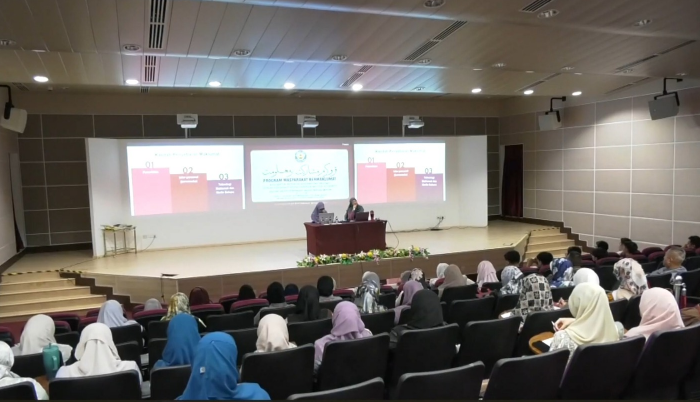
The presentation was held during the fifth day of the of the Asem (Asia-Europe Meeting) Workshop 2010, held at the Universiti Brunei Darussalam. -- Courtesy of The Brunei Times
| < Prev | Next > |
|---|
Hot Topics of the Day
-
Do Your Slow Driving On The Inner Lane I do believe speed freaks exist everyday on the highway, the reason being that they have powerful...
-
The Father of State Nobility: Almarhum Hj Rais Bin Banih Thank you for enjoying us all this time, for the services that you have sacrificed, we will miss...
-
Government Payers Aidilfitri is around the corner, however payment from MCYS, MOD and MoRA have not yet been received....
-
Advantages Of Having LRT In the recent Hot Topic regarding the ‘No Reason To Scrap The LRT Project', I would also like to...
-
Status Of QBB In regards with the recent article news ‘QBB Ghee: Halal Or Not? Jury Still Out In Brunei'. Why...
-
From A Drama To a VCD/DVD I am also saddened at the passing of a cast that we all together admired and respect, Hj Rais Banih...


may Allah S.W.T bless Hj Rais Banih @ L